
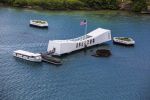
The Pearl Harbor Attack on December 7th, 1941, was a plan where approximately 353 airplanes of the Japanese Empire attacked the US Navy at Pearl Harbor. Pearl Harbor was in the United States Territory of Hawaii. Although it is often called a sneak attack, I call it a surprise attack. The Japanese surprised the United States by attacking in Hawaii.
There is an opinion that the United States should have known. I feel that ” could have known is more accurate. There were signals missed, but the thought of going all the way to Hawaii without being detected seemed unlikely.
The United The was a plan where Pearl Harbor Attack on December 7th, 1941, 353 Airplanes of the Japanese Empire attacked the US Navy at Peral Harbor. were pretty sure that Japan was gong to attack, but The Philippines or the coast of China were more likely, maybe even Singapore or Hong Kong.
As it turned out, on December 8th, the same day, because of the International Date Line. Japan attacked or bombed multiple targets. Thailand, Malaysia, the Philippines, the Dutch East Indies (Indonesia, Guam (US territory), Wake Island, and Hong Kong, which coincided with the Pearl Harbor Attack
Bad Diplomatic Relationship
In the years before the Pearl Harbor attack, the USA and Japan had developed very bad diplomatic relations. They had been the 2 Big Boys in the Pacific, which led to a very tense relationship. Just before the attack, the USA cut all oil imports to Japan over disagreement with Japan’s war in China.
Since Japan imported all of its oil, it had to either change its policy or attack the USA. They chose to attack. This is a quick look at the years of differences that led to this situation. This page is about Pearl Harbour, not the diplomatic failures, so I am just giving a quick reference. This is the lead up to the attack.
After the final negotiations crumbled, Japan decided to launch the attack. A great strategic accomplishment was needed for the attack to be a surprise. Japan chose to use a Northern approach to avoid the normal shipping lines for commerce.
The fleet also maintained “Radio Silence,” only receiving signals and not sending any. At this time, an enemy could detect where a radio signal was sent from, but not where it was received.
The Japanese fleet pulled off a great accomplishment. They even had to refuel once during the trip. This required the fleet to stop so gas lines could be attached and not pulled out of their connections.
They also managed to come in behind a storm front that helped keep them hidden. The use of the Northern route made the attack planes approach Hawaii from the North instead of the East. This also helped the fleet avoid detection.
Pearl Harbor Attack
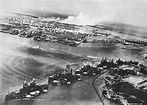
At around 6:30, the USS Ward noticed a periscope following a merchant ship just outside Pearl Harbor. Around 6:40, the first shots were fired by the USS destroyer. This was not a confirmed sinking at the time, but the Ward had hit and sunk a Japanese midget submarine. These were the first shots fired in the Pearl Harbor attack.
At 6:10a.m. 353 Japanese planes started to launch from these 6 aircraft carriers.
- Akagi
- Kaga
- Soryu
- Hiryu
- Shokaku
- Zuikaku
They flew from north of Oahu and between the two ranges of Oahu’s Mountains. The plan was for 2 waves of planes to perform the Pearl Harbor attack. A Radar station noticed the unidentified planes flying south. The officer decided they were a flight of B-17’s flying in from the mainland.
Radar was new and not completely trusted, even though the British had used it to great effect in the Battle of Britain. This was a chance to discover the attack, but it was missed.
The attacked was started at 7:55 with the first wave. The first attack was directed at the battleships. The Japanese attack was done by torpedo planes, high-level bombers, and fighter planes to protect the other planes. Within minutes, much of the American fleet was damaged, and 5 battleships were sunk by the end of the attack.
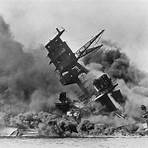
At 8:10, the signature event of the Pearl Harbor Attack took place. The explosion of the USS Arizona. The Arizona sank almost immediately with the loss of 1, 177 lives. The Arizona is still in the harbor and has a Memorial straddling the sunken hull. Sadly, the last known survivor passed on April 01, 2024. Lou Conter. Mr. Contor fought during the rest of the war and had a long, distinguished service to the United States.
During the Pearl Harbor Attack 4 battleships were sunk outright. While the USS neveda was so damaged that all though it got under way during the attack. The Neveda had to be run aground so it would not sink iand block the entrance to the harbor.
The two waves of planes did other significate damage. Including devastating the airplanes stationed on Oahu. Some at Pearl Harbor and others at airfield at other locations on the Island. When the planes got back to the aircraft carriers it was decided not to launch a second attack.
In my humble opinion, this was a great benefit to the United States from the Pearl Harbor Attack. The damage done was great, but it was not as devastating as was first thought. Without the second attack, some major damage was avoided. The most important being the oil facilities. This helped keep the Navy supplied with oil in the next few months, including the all-important battle of Midway in June 1942.
Also, the Dry Dock and repairing facilities were not put out of action. They kept damaged ships, including the Battleships damaged during the attack, to be repaired in Hawaii instead of the West Coast. This took some of the sting of the Pearl Harbor Attack, although it was really figured out yet.
Battleships Sunk During the Pearl Harbor Attack
Five Battleships
- USS Arizona: Exploded and sunk with 1,187 lost lives. Still on the floor of the harbor
- USS Oklahoma: Capsized and sunk, 429 Lives lost. Still on the harbor floor.
- USS California: Sunk with 165 Casualties.
- USS West Virginia: Sunk and. repaired and reassigned to duty on September 23, 1944.
- USS Utah: Had been converted to a target ship, rolled on her side, and sank:
Other Ships Damaged
Four battleships were damaged during the attack on Pearl Harbor. The USS Nevada attempted to leave the harbor during the attack but suffered heavy damage and had to be beached to prevent sinking and plugging up the entrance to the harbor. The USS Maryland was only slightly damaged and returned to service in January 1942. The USS Tennessee also suffered limited damage and was back in service by January 1942. The USS Pennsylvania was in dry dock during the attack, received minor damage, and returned to service in January 1942.
Other naval vessels were also damaged during the attack, including three destroyers, with two of them eventually destroyed. One heavy cruiser and three light cruisers also suffered damage during the assault on Pearl Harbor.
Airplanes
The Major Airplanes Used In The Pearl Harbor Attack
The Japanese also targeted the airplanes and airfields on Oahu during their Pearl Harbor Attack. During the attack, 188 American aircraft were destroyed and 159 were damaged, many while still parked on the ground.During the attack, 188 American aircraft were destroyed and 159 were damaged, many while still parked on the ground.. This happened because the airplanes were parked next to each other. This was done to prevent sabotage, but it was not a good idea for an air attack. One plane blow, they all do is the problem. These planes were Navy and the Army Air Corps. The Air Force was still a part of the Army.
Medal of Honor Winner At The Pearl Harbor Attack:
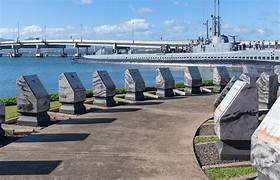
On December, 7 1941, 15 fantastic Americans were awarded the Medal of Honor. There could have been more, I’m sure, but these are the 15 great Americans who were singled out by the country at this contemporary time. Here are the 15 from December 7th.
- Captain Mervyn Bennion
- Chief Aviator Ordinanceman John W. Finn
- Ensign Frances C. Flaherty
- Lieutenant Commander Samuel J. Fuqua
- Chief Boatswain Edwin J. Hill
- Ensign Herbert C. Jones
- Rear Admiral Isaac C. Kidd
- Gunner Jackson C Pharris
- Chief Radoman Thomas J. Reeves
- Chief Machinist Donald K. Ross
- Machinist Mate First Class Robert R. Scott
- Chief Watertender Peter Tomich
- Captain Franklin Van Valkerburgh
- Seaman First Class James R. Ward
- Commander Cassin Young
On this day of Infamy, 2008 sailors, 218 Soldiers and airmen, 109 Marines, and 68 civilians lost their lives. But these were the 15 chosen to receive their country’s greatest honor. BLESS THEM ALL!!!
Conclusion
My personal conclusion is that although some mistakes were made that may have allowed the Americans to know the attack was coming. The Japanese managed a great feat with the Pearl Harbor Attack and of getting to Hawaii undetected. They performed a very successful attack that did considerable damage to the American Fleet. But the damage was not nearly as bad as it could have been.
The Japanese did not destroy the repair facilities or the Oil Infrastructure. The American Aircraft Carriers were not in the Harbor. They were out on patrol. These factors allowed the American Navy to cover quickly and fight back in early 1942. Bombing Tokyo, the Battle of the Coral Sea, and Midway may all have been beyond America’s capability if Pearl Harbor had inflicted more damage.
I give a grateful thank you to all the brave Americans of the Pearl Harbor Attack and a special Thank You to the 15 Medal of Honor awardees.
*Historical information referenced from Encyclopedia Britannica, the U.S. Navy Historical Center, and publicly available WWII historical archives.